Frontend work at Bally’s Interactive. Personal blogs rebuilt across Hugo, Next.js, and React. A record of how I build, publish, and refine for the web.
02 / PROFESSIONAL WORK
BALLY’S INTERACTIVE
2022.09 — 2023.12 / UNITED KINGDOM
Frontend Engineer Bally’s Interactive
I worked as a frontend developer at Bally’s Interactive. Jackpotjoy is a representative example of the kind of website I worked on.
Campaign pages across brands
Developed React and TypeScript marketing landing pages for gaming platforms serving the UK, Europe, and North America.
Reusable UI architecture
Designed reusable component structures for recurring brand campaigns to minimize duplicated code. Worked with Styled-components and Storybook to maintain the UI system.
API integration & browser compatibility
Integrated REST and GraphQL APIs, implemented responsive layouts, and addressed cross-browser compatibility.
From planning to production
Collaborated in English with designers, planners, and backend engineers in a multinational team, shipping to production on short marketing release cycles.
SOURCE: OWNER’S RÉSUMÉ · BALLY’S EXPERIENCE
The public pages below illustrate product context. They do not identify my individual feature ownership or reproduce the site as it was during my employment.
PUBLIC PRODUCT / JACKPOTJOY
Navigation & discovery
Category navigation and grouped game listings connect a broad catalogue to individual pages.
Local rebuild · 21d0eff (Dec 2024) · captured Sep 2026Open full image ↗
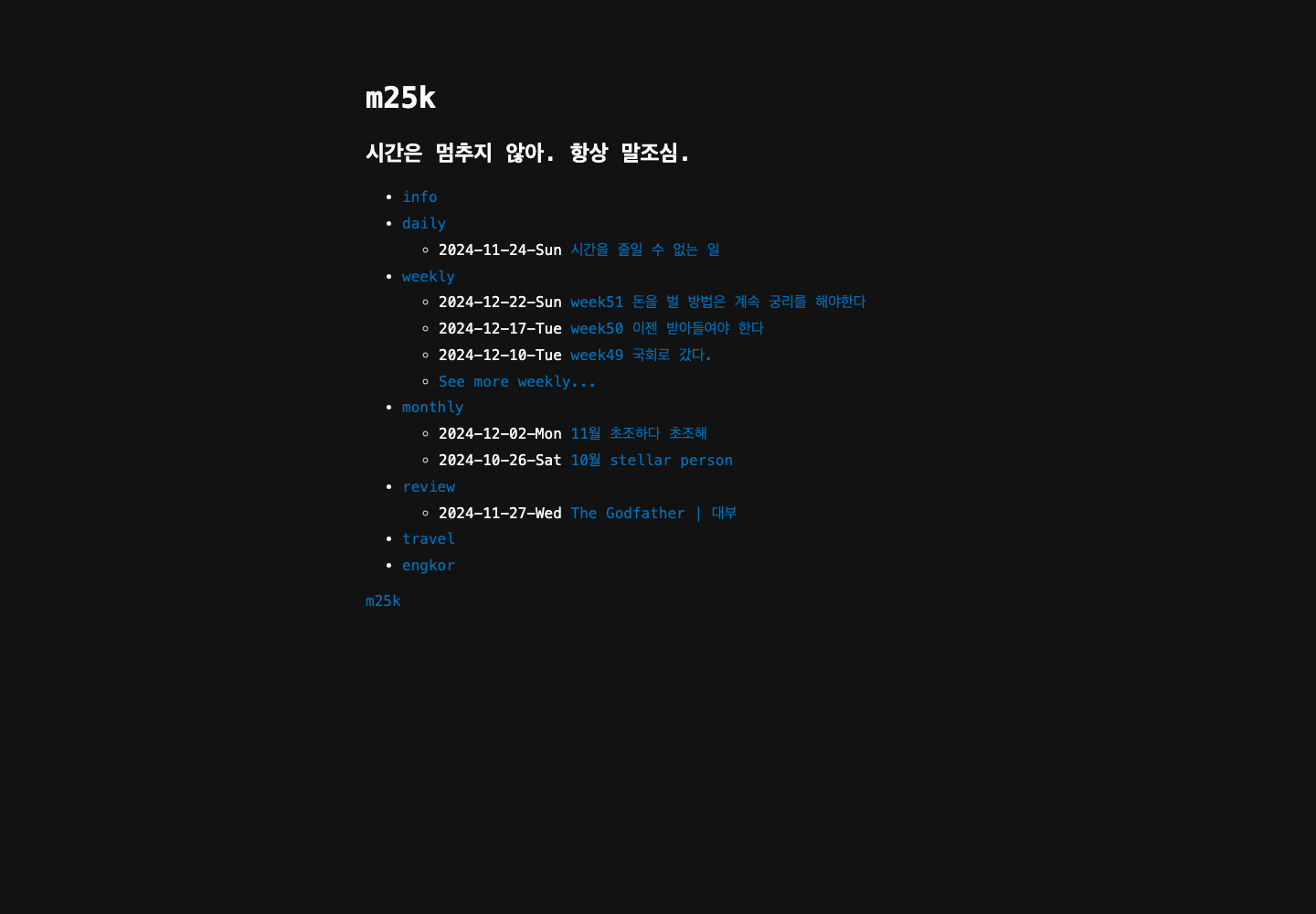
Hugo / Markdown / Sass / GitHub Pages
A small, static place to write.
A Hugo blog using the nostyleplease theme, with daily, weekly, monthly, review, travel, and English/Korean writing sections. Local templates and Sass customize the reading experience.
Configured a Hugo build and GitHub Pages deployment workflow; refined list limits and browser presentation. This version kept publishing close to Markdown files.
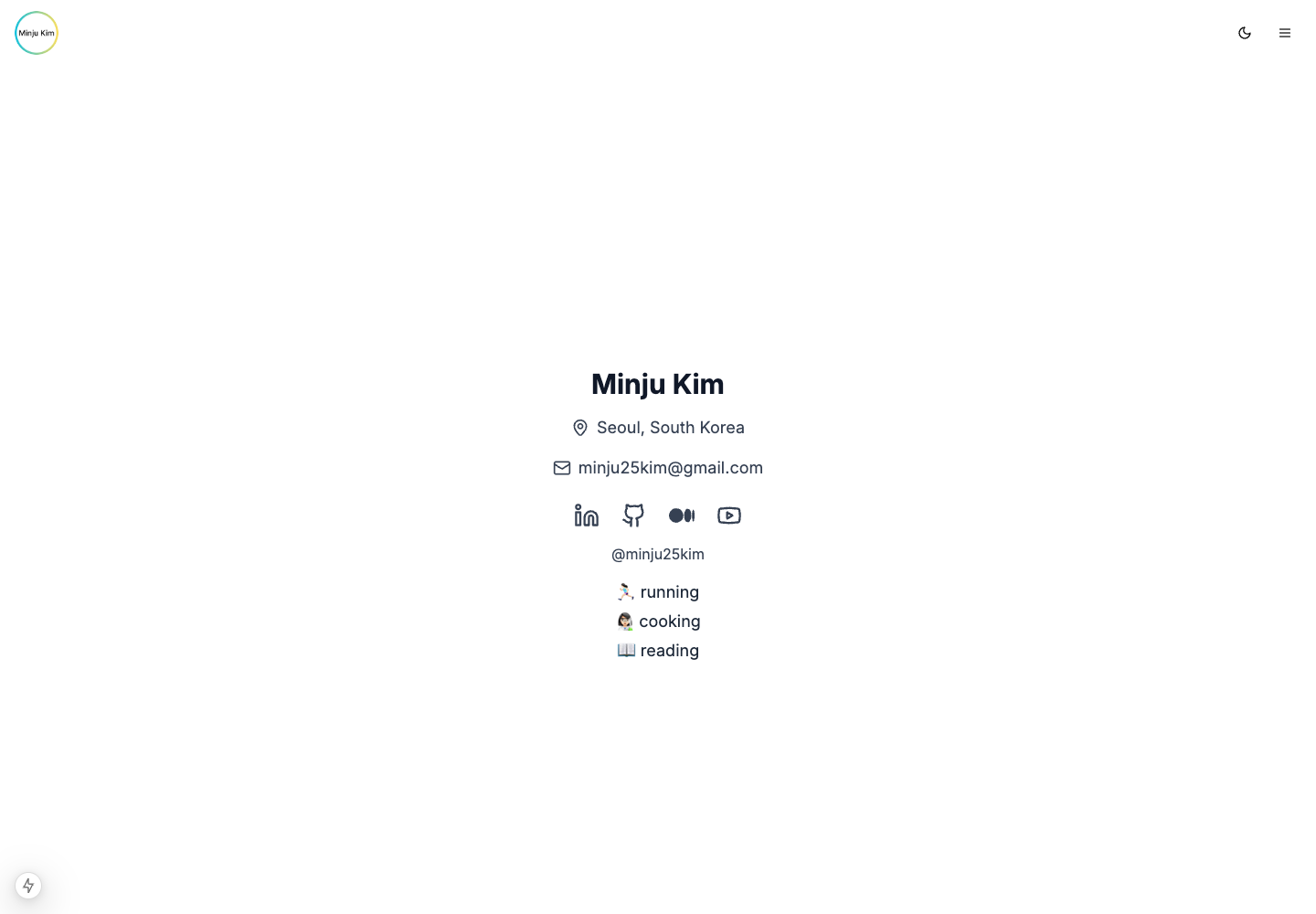
Built a Next.js site with Fly.io deployment configuration, first with a MongoDB/NestJS search backend and later Supabase-backed blog and dev views, plus persistent light/dark themes. The composer evolved into Plate-based editing with separate create, edit, and read-only views.
Explored database-backed authoring, structured editor values alongside Markdown, and a TanStack Query experiment marked as work in progress in the commit history.
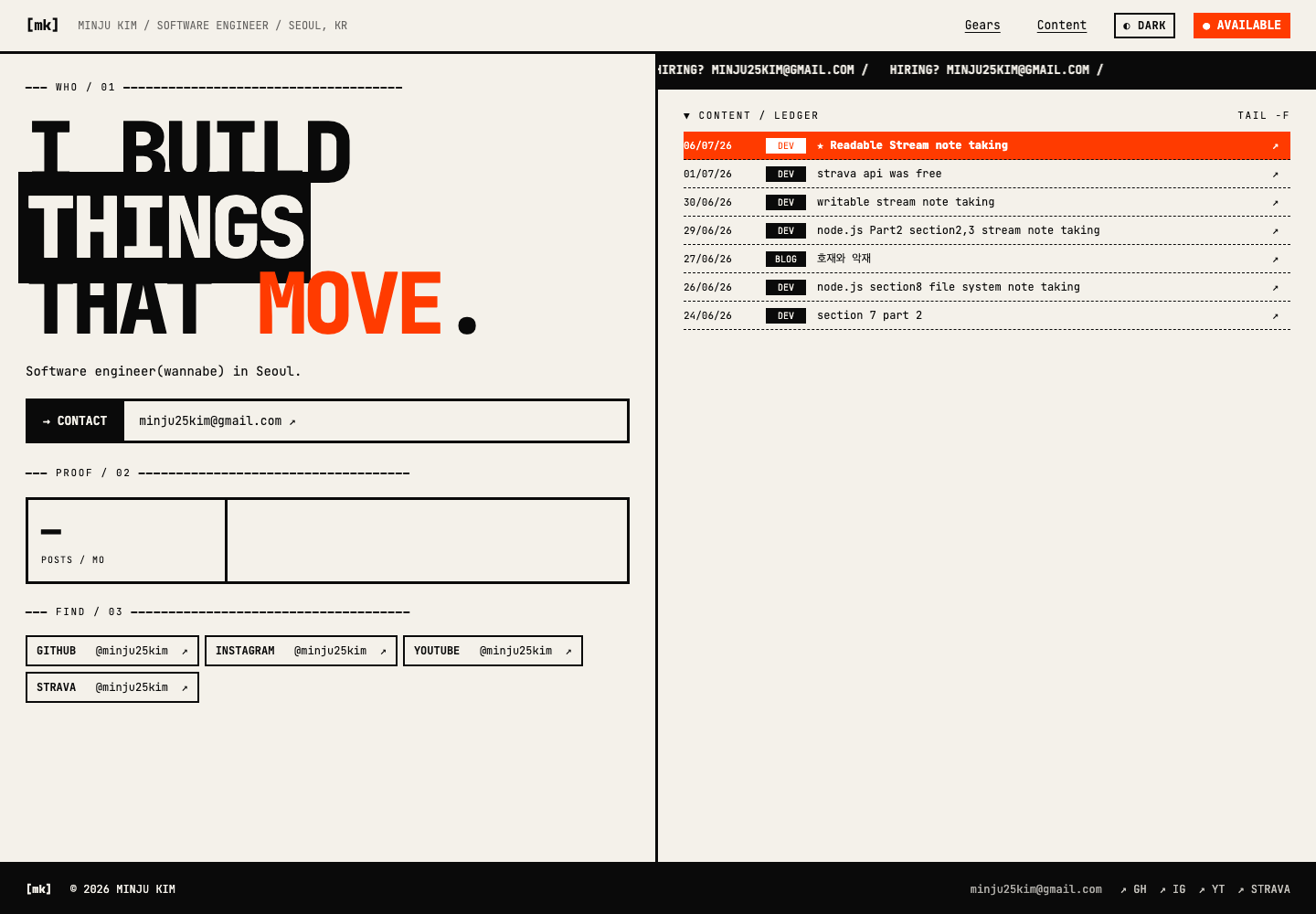
The current repository uses a Vite application, file-based routing, a unified content table, and TipTap publishing tools. Its visual identity brings the home, content, and gears pages together.
The detailed log below follows this repository. Together, the three repositories show successive approaches to personal publishing; they do not establish a direct code or data migration between every version.
The backend added an Atlas Search aggregation over title, content, and keywords with fuzzy matching (maxEdits: 2). The Next.js /api/search endpoint forwarded queries to the backend’s /search endpoint on the same day.
The Next.js repository removed its MongoDB helper and introduced Supabase-backed development content. This dates the code change; it does not establish when the separate backend stopped running.
Replaced the earlier green-accented interface with a newspaper-inspired brutalist design: monospace type, oversized headlines, thick rules, and orange highlights.
WHAT CHANGED
Brought the home, content, and gears pages into a shared visual language using reusable palette tokens and ledger-style layouts.
Removed the Strava route, sync script, scheduled workflow, and associated homepage activity statistics. The commit message cites API pricing as the reason.
WHAT CHANGED
Reduced the site’s integration footprint while preserving the implementation in Git history.
Reviewed through . Blog chapters are curated from the three repositories’ commits, configuration, and source files. The dates describe their visible commit history, not guaranteed deployment periods.
The Bally’s dates and responsibilities are drawn from my supplied résumé; product observations link to current public Jackpotjoy pages. Several current-blog commits credit Claude as a co-author. Private ChatGPT conversations were not used.